Altitude training without a mountain: what research says about hypoxic training
Live high train low, repeated sprints in hypoxia and training from home: what meta-analyses and studies in elite athletes show about altitude training.
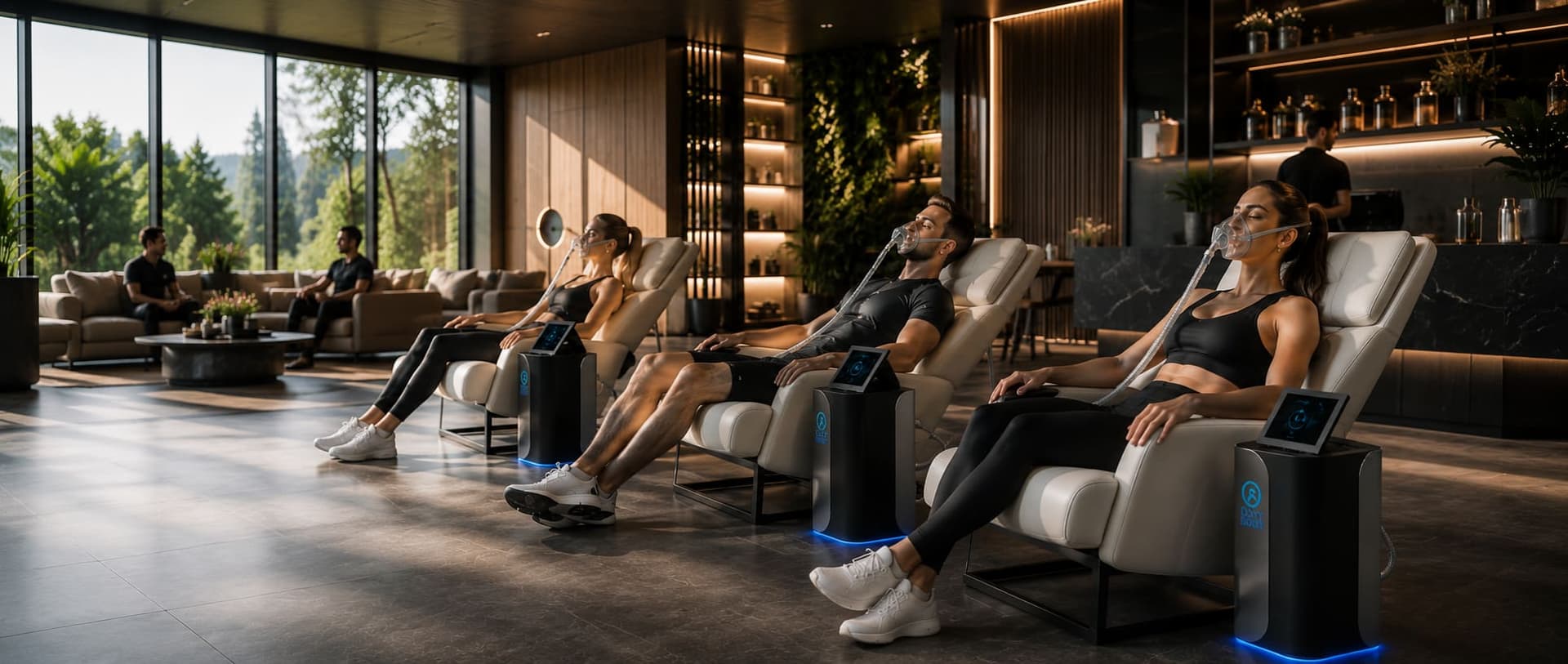
Endurance athletes have trained at altitude since the 1960s. Today you can do it without a mountain: a system that supplies low-oxygen air simulates altitudes of more than 6,000 metres. Research on altitude training is extensive. All sources in this article are in our research library.
Live high, train low
The classic approach is living at altitude and training in the valley. A large meta-analysis of 51 studies compared six forms of altitude training (Bonetti & Hopkins, 2009). "Live high, train low" gave the clearest gains in endurance power. Short, artificial hypoxic exposure also improved the power of sub-elite athletes, by 2.6% on average.
Review articles give practical guidance on altitude, daily dose and duration, and show how elite athletes plan altitude training across a whole season (Millet et al., 2010; Mujika et al., 2019; Bonato et al., 2023).
Live low, train high
Less well known, but more practical for most people: simply living at home and only training in low-oxygen air. A 2020 overview describes the many forms, from passive exposure at rest to sprint and strength training in hypoxia (Girard et al., 2020).
Sprinting in hypoxia
Repeated-sprint training in hypoxia in particular has been studied widely over the past ten years:
- Meta-analysis: sprint training in hypoxia improved mean repeated-sprint performance more than the same training in normal air (Brocherie et al., 2017).
- Ten years of research: 77% of controlled studies reported an additional benefit, mainly in team, combat and racket sports (Faiss et al., 2025).
- Rugby: in international rugby players, four sessions in two weeks improved peak and mean power, only in the hypoxia group (Beard et al., 2019).
- Cross-country skiing: skiers completed more sprints in hypoxia than the group training in normal air (Faiss et al., 2015).
From research to practice
Altitude training needs the right dose: how high, how long and how often. An altitude simulator makes that precisely adjustable, at home or at the club. Preparing for a mountain trek or a race at altitude? Targeted preparation helps you arrive ready.
The studies mentioned were carried out by independent researchers and published in scientific journals. Altitude, duration and type of training differ per study. We present the results in abridged form and for information only; the original publication prevails. All sources are listed in our research library.
View the altitude training systems or find the right system with the configurator.