
What you can measure, and how to track it
Whoever works on longevity wants to know where they stand. A handful of measurements, taken consistently, give a clear picture of your fitness, recovery and sleep, and of how they develop over time.
Try it yourself
How to read your data
Choose a measurement and a period, and switch the weekly average on and off. You will see why single days say little and the trend says more.
Sample data, for illustration only
HRV
53 ms · Ø 7
Measured overnight. Day-to-day swings are normal; a busy week often shows as a dip.
VO2max
42 ml/kg/min
Last exercise test
Muscle mass
34.1 kg
Last body composition analysis
How to read this
- 1The shaded period is your baseline: the first two weeks before you start a new routine.
- 2The thin line shows single days; the thick line shows the 7-day average. Follow the thick line.
- 3A dip during a busy week is normal. What matters is how your values develop over months.
Six measurements that give a picture
These are the measurements that most people working on longevity follow. Most of them can be taken with a wearable; some call for a test.
Heart rate variability (HRV)
The variation in time between heartbeats, a widely used indicator of recovery and how your body handles stress.
Wearable, ideally measured overnight or every morning at the same time.
Resting heart rate
Your heart rate at complete rest. Over weeks and months it shows how your fitness develops.
Wearable or a morning measurement before getting up.
VO2max
The maximum amount of oxygen your body can take up and use during exertion, a recognised measure of endurance capacity.
Estimated by sports watches; measured precisely with a breath gas analysis during an exercise test.
Sleep
Duration, regularity and the share of deep and REM sleep. Sleep is where much of recovery takes place.
Ring, band or watch that tracks sleep stages and nightly heart rate.
Oxygen saturation (SpO2)
The percentage of haemoglobin in your blood that carries oxygen.
Finger clip or wearable; during IHHT it is measured throughout the session.
Body composition
The ratio of muscle mass, fat mass and water, more informative than weight alone.
Professional body composition analysis (bioimpedance) or a DXA scan.
Which wearable fits
Most wearables measure heart rate, HRV and sleep. Choose the form you will actually wear every day and night; consistency matters more than the brand.
Smart ring
such as Oura or Ultrahuman
Comfortable at night, strong on sleep, HRV and resting heart rate.
Fitness band
such as Whoop
Worn continuously, focuses on recovery, strain and sleep.
Sports watch
such as Garmin, Polar or Apple Watch
Training data, GPS and a VO2max estimate, plus heart rate and sleep.
How to measure in a way that means something
Measure a baseline first
Measure for one to two weeks before you start with a new routine, so that you know your starting point.
Same moment, same conditions
Measure at a fixed time, for example on waking, so that measurements can be compared.
Look at trends, not single days
Individual values vary from day to day. Weekly averages and the trend over months tell you more.
Keep a log
Note your sessions, training, sleep and how you feel, so that you can relate your measurements to your routine.
Measured during the session
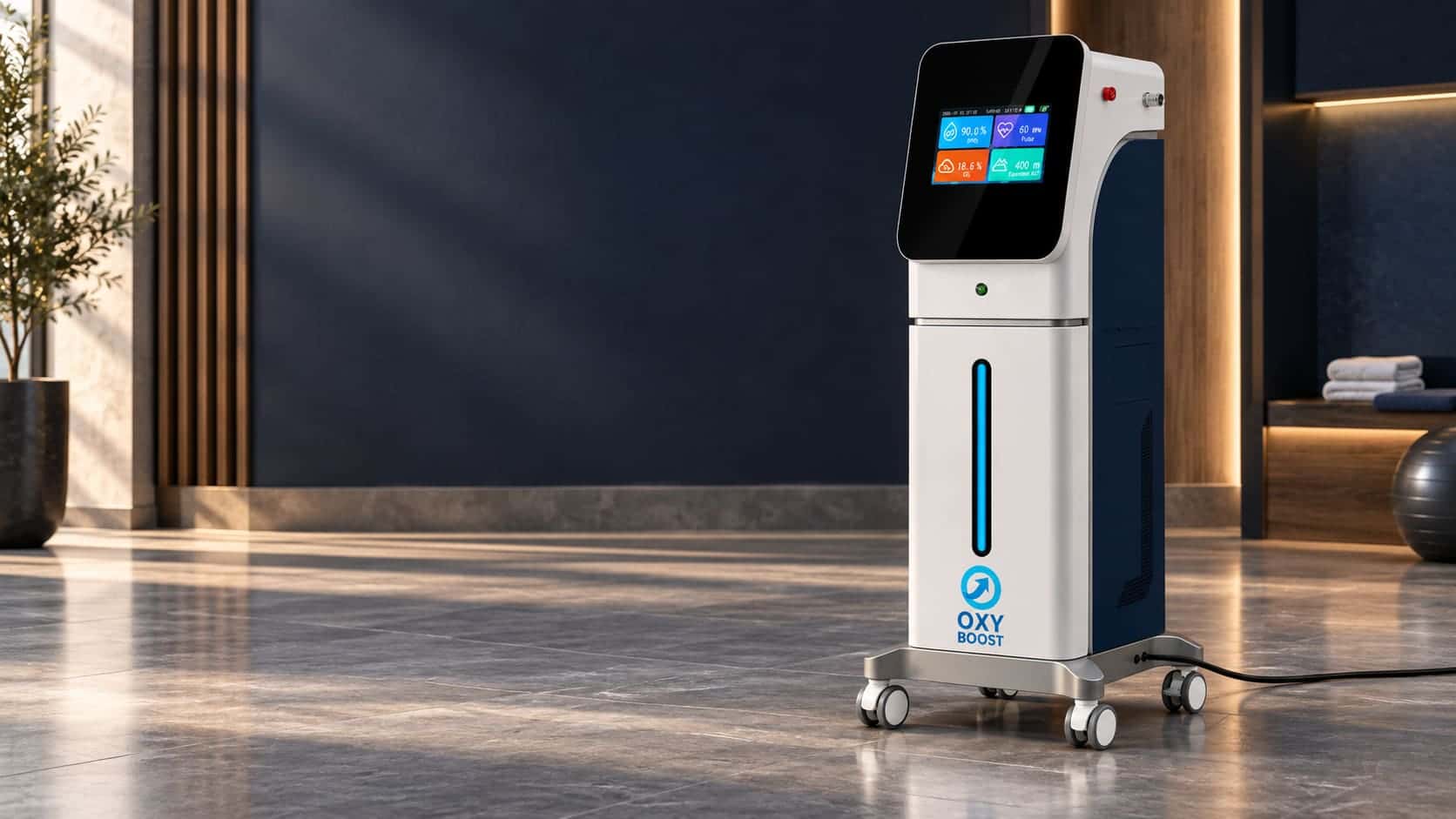
Our IHHT systems measure oxygen saturation and heart rate throughout the session and show the curves on screen. That way each session is recorded.
IHHTBlood values through your physician
Blood values give an additional picture, for example of blood sugar, cholesterol or iron. Have these measured and interpreted by your GP or a physician.
Questions about measuring
Do I need a wearable?
It is not required, but it makes it easy to follow heart rate, HRV and sleep every day. Choose one you are happy to wear day and night.
How accurate are wearables?
For trends over time they are useful; individual values can deviate. For a precise VO2max or body composition, a test with professional equipment is more accurate.
How quickly will I see a difference?
That differs per person. That is why we advise measuring a baseline first and then looking at the trend over weeks and months.
Can OxyBoost help with this?
In our showroom we gladly discuss how you can track your routine, and which systems record data during the session.
Discuss your routine with us
In the showroom in Goes we show you the technologies and how you can follow your progress.