Molecular hydrogen: what research says about hydrogen inhalation
From the foundational 2007 study to recent studies in athletes: what hydrogen inhalation does for fatigue, sprint power and fat metabolism.
Hydrogen is the smallest molecule there is. For a long time it was considered inert in the body, until a Japanese study in 2007 painted a different picture. Since then research has grown quickly, including in sport. All sources in this article are in our research library.
The beginning: a selective antioxidant
In cell experiments, researchers found that hydrogen selectively neutralises the hydroxyl radical, the most aggressive form of reactive oxygen (Ohsawa et al., 2007). Other oxygen compounds that the body needs as signalling molecules were left untouched. Later reviews also describe hydrogen's influence on gene expression and energy metabolism (Ohta, 2014).
Inhalation and exercise
- Less fatigue: 24 healthy men inhaled hydrogen-rich gas or air for 60 minutes before an exhausting cycling test. After hydrogen they reported less fatigue and perceived exertion, and kept their cadence better at the end (Dong et al., 2024).
- Sprint power: in a second study, power in the fourth Wingate sprint was higher and power dropped less between the first and last sprint (Dong et al., 2024).
- Fat metabolism: during moderate cycling, 1% hydrogen increased breath acetone, a marker of fat metabolism (Hori et al., 2020). At rest, too, metabolism in active women shifted further towards fat oxidation (Grepl et al., 2025).
Drinking hydrogen-rich water has also been studied. In professional footballers, the last sprints of a repeated-sprint test were 1.9 to 3.4% faster (Botek et al., 2022).
What the reviews say
Reviews on hydrogen in sport conclude that hydrogen, inhaled or drunk, appears to favourably affect several performance outcomes and markers of fatigue (Ostojic, 2015; Ostojic, 2021). There is no standard protocol yet; dose and duration differ per study.
A complement to the other technologies
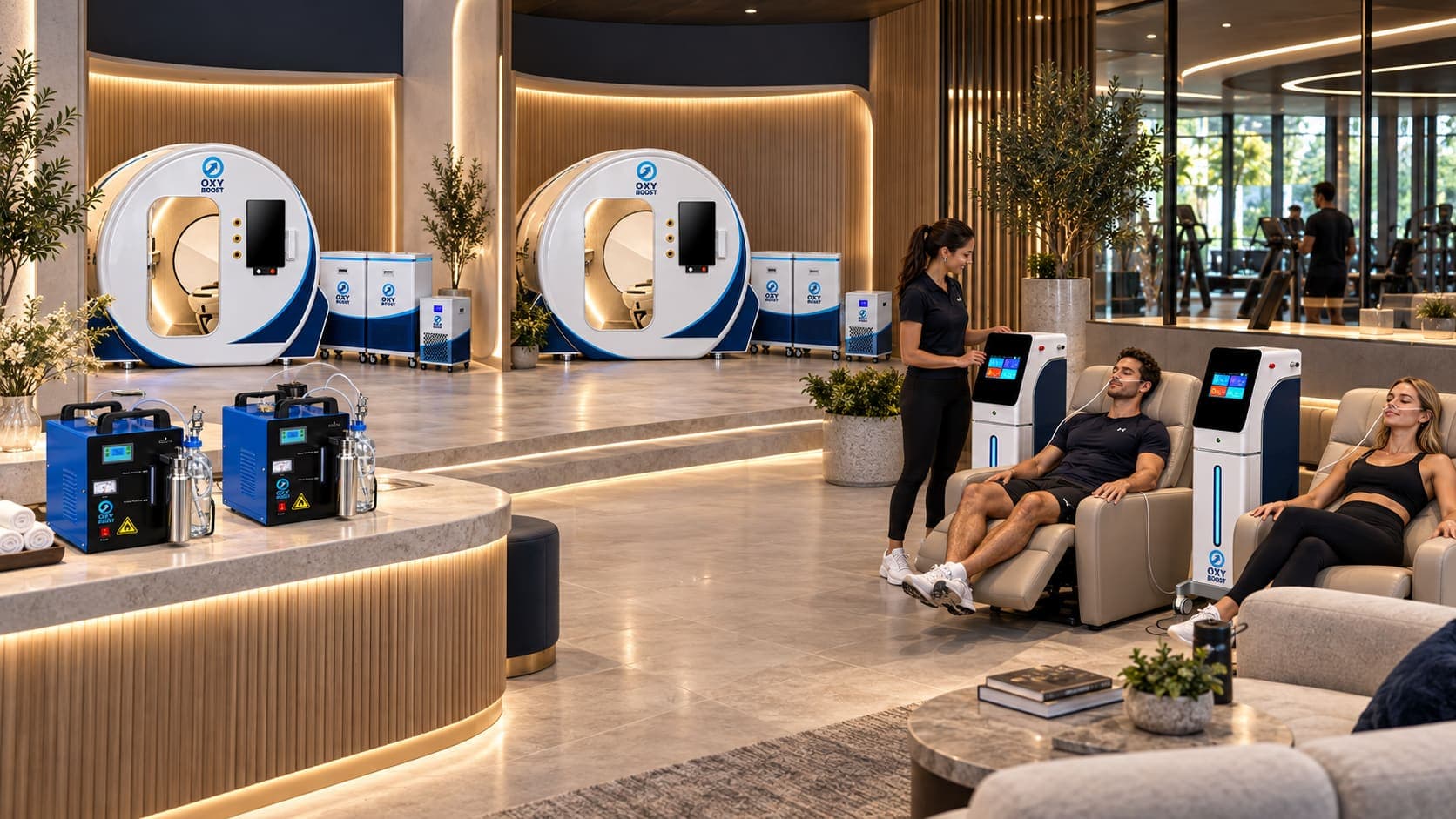
Where oxygen training increases oxygen supply, hydrogen focuses on the balance between oxidants and antioxidants. That is why it combines well with a hyperbaric chamber or IHHT, in a recovery zone or at home with a compact tabletop unit.
The studies mentioned were carried out by independent researchers and published in scientific journals. Form of intake, dose and duration differ per study. We present the results in abridged form and for information only; the original publication prevails. All sources are listed in our research library.
View the hydrogen systems or experience a session in our showroom in Goes.